The Blueprint: The 'Zhenzhai' Tiger
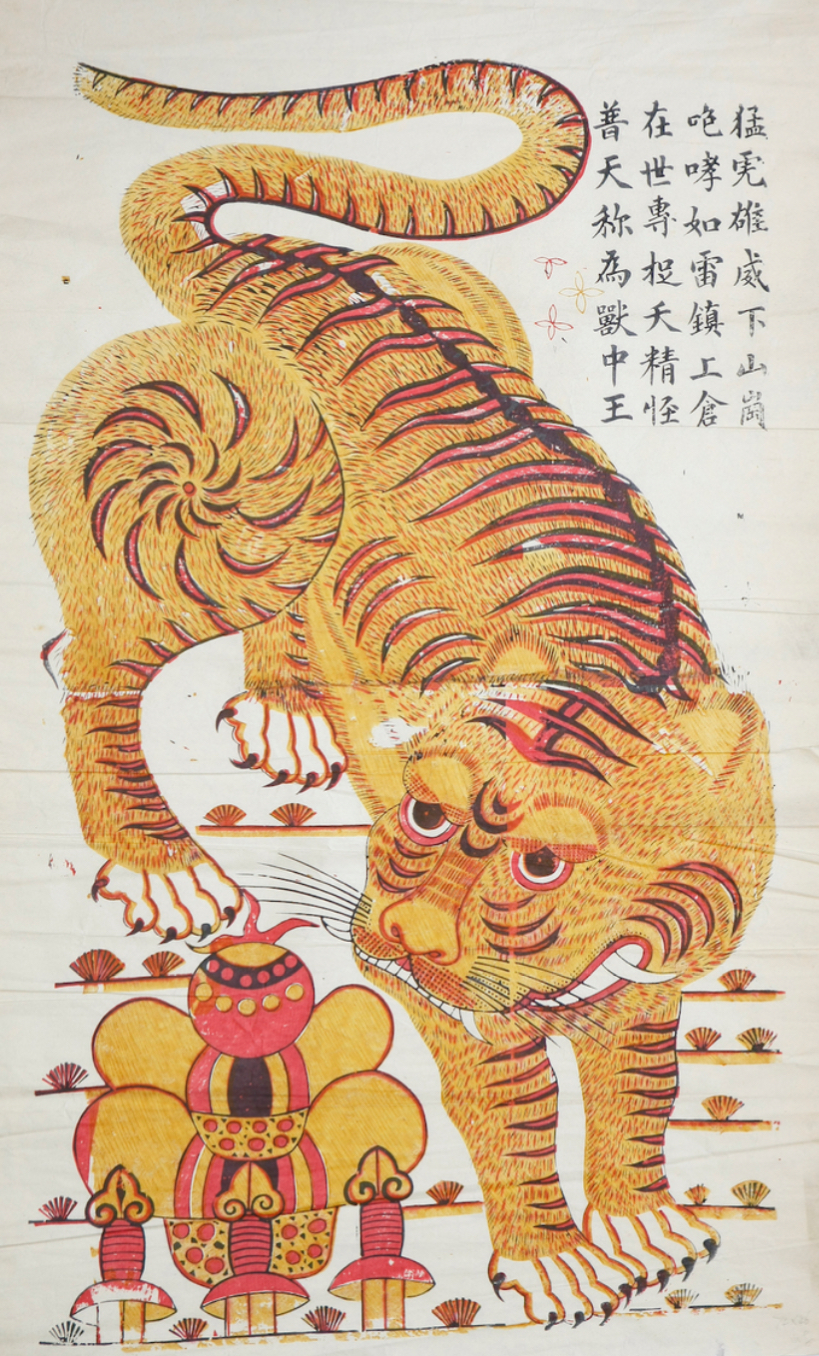
Before it took shape in clay, it was an ink talisman. The migrating Han army brought this 2D memory from the Central Plains to ward off the unknown.

The Fortress of Memory
The immigrants didn't just bring swords; they brought enclosed courtyards. In the unfamiliar, disease-ridden frontiers, the traditional architecture was their physical fortress. And at the highest point of this fortress—the roof ridge—they needed a psychological guardian. The Wamao was born out of this spatial anxiety.
"But as these roofs spread further from the imperial center, the guardians began to mutate..."
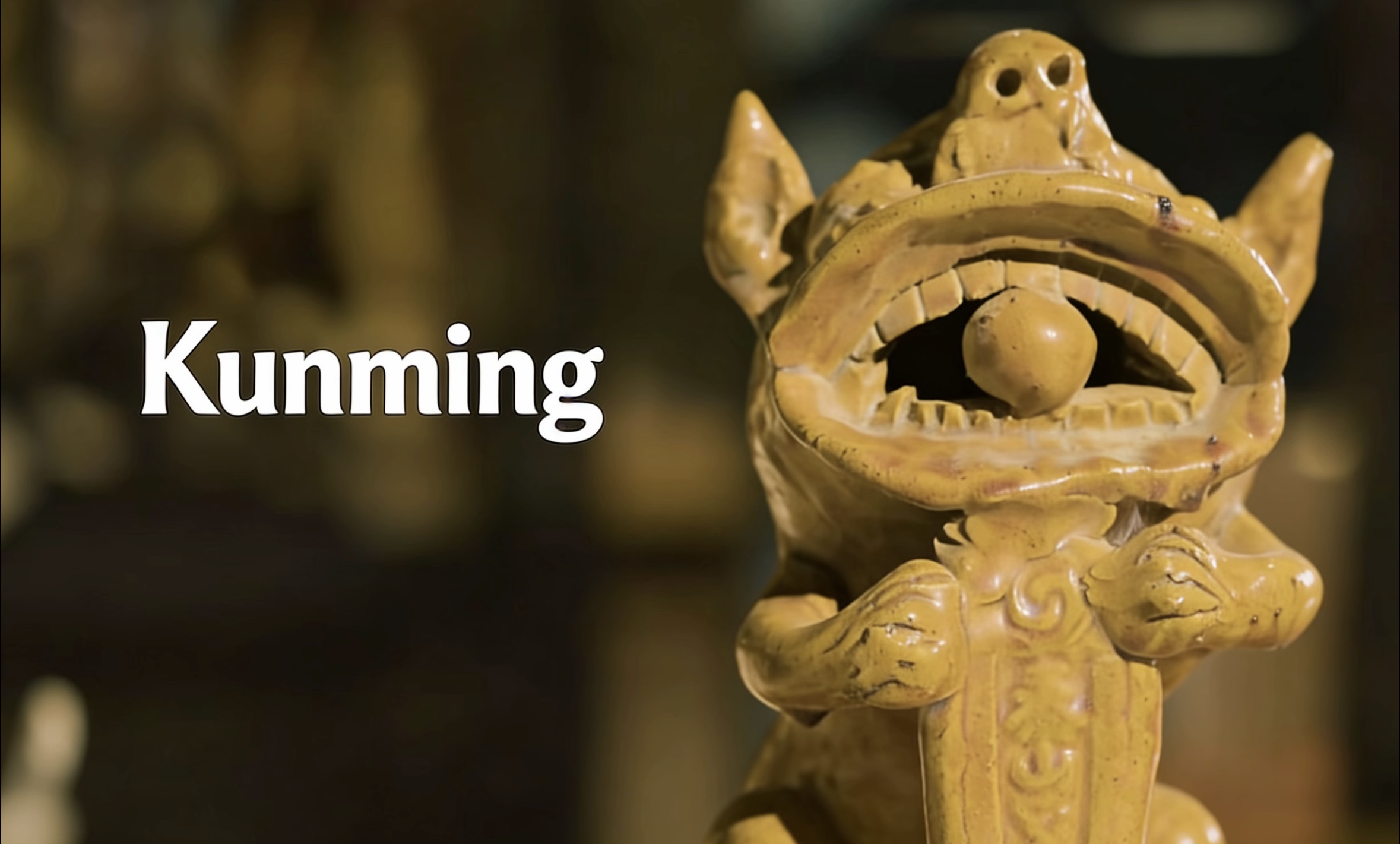
Kunming: The Imprint of Rational Order
In Kunming, the central core where imperial power was strictly monitored, artisans utilized wheel-thrown pottery techniques (forming the neat base seen here). The Wamao’s form is symmetrical and regular, preserving the rational, structured order brought by Han immigrants. Its aesthetic still echoes the formal stone guardian lions of the Central Plains.
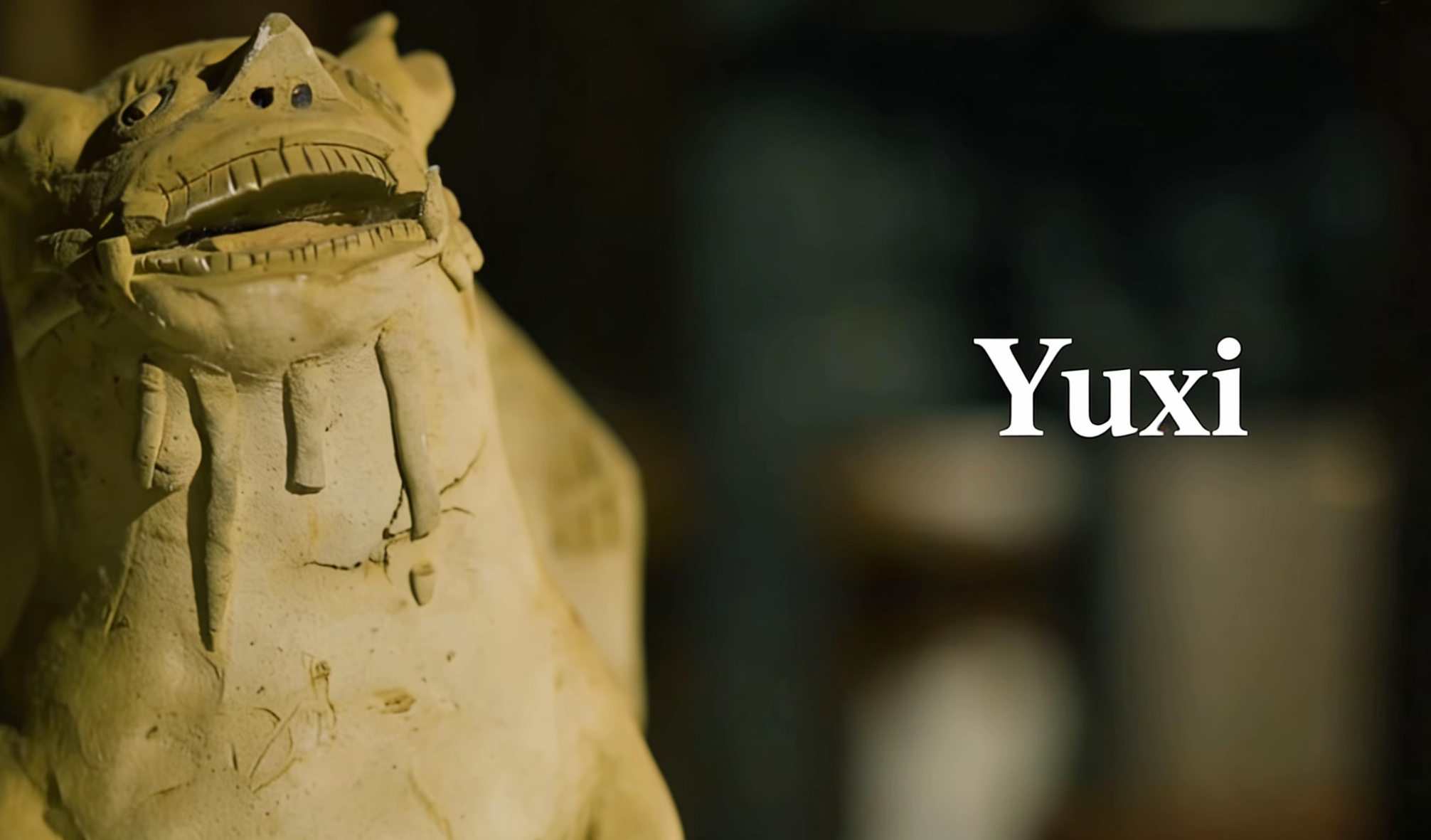
Yuxi: The Subtle Torsion of Form
Moving slightly outward from the strict core, the rules begin to bend. In Yuxi, while the wheel-thrown pottery base remains, the clay is often rougher and unglazed. The facial features exhibit a subtle torsion; the eyes begin to bulge and the mouth widens, signaling a quiet rebellion against standard anatomy as indigenous wildness begins to test the rules.
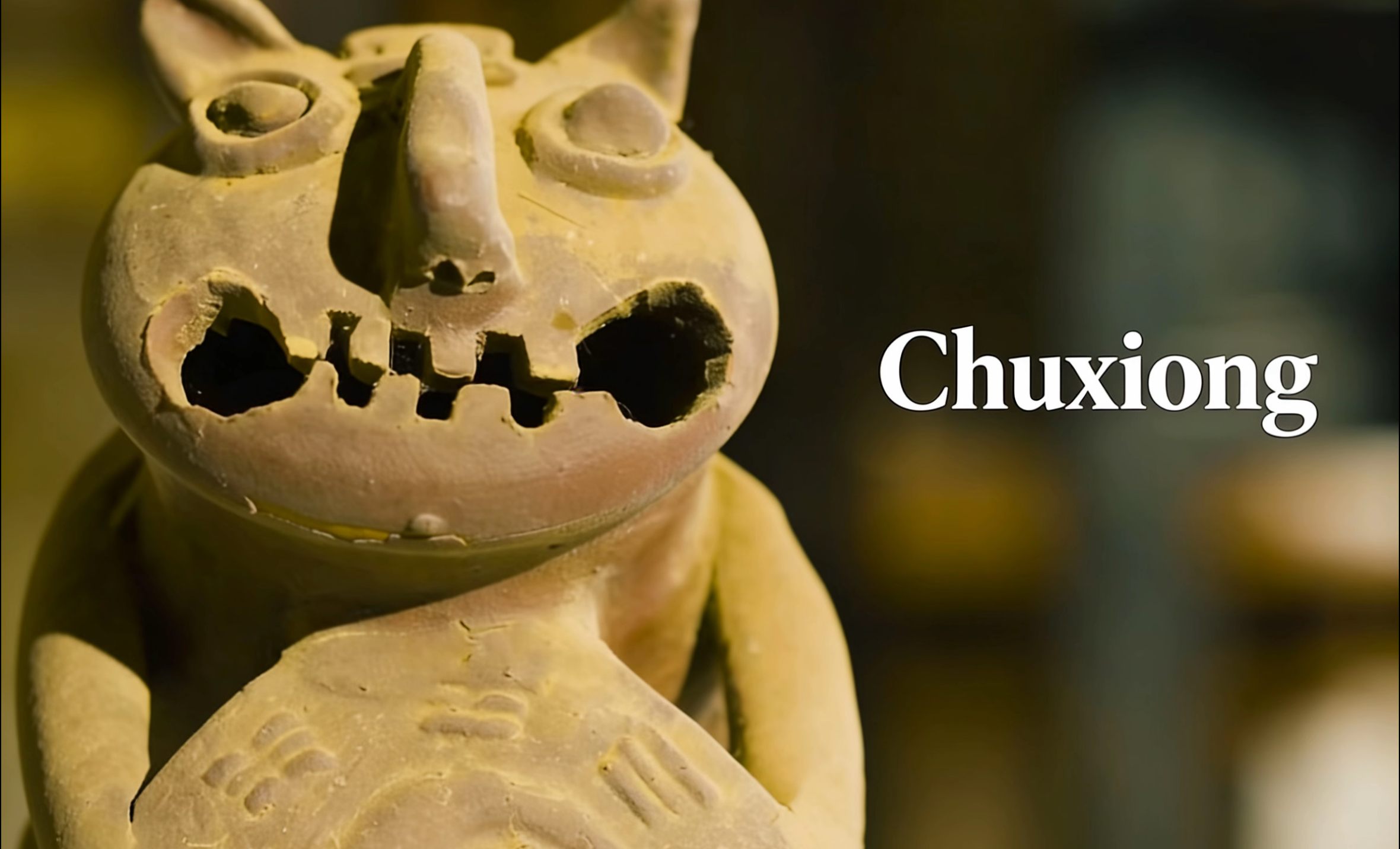
Chuxiong: The Indigenous Deconstruction
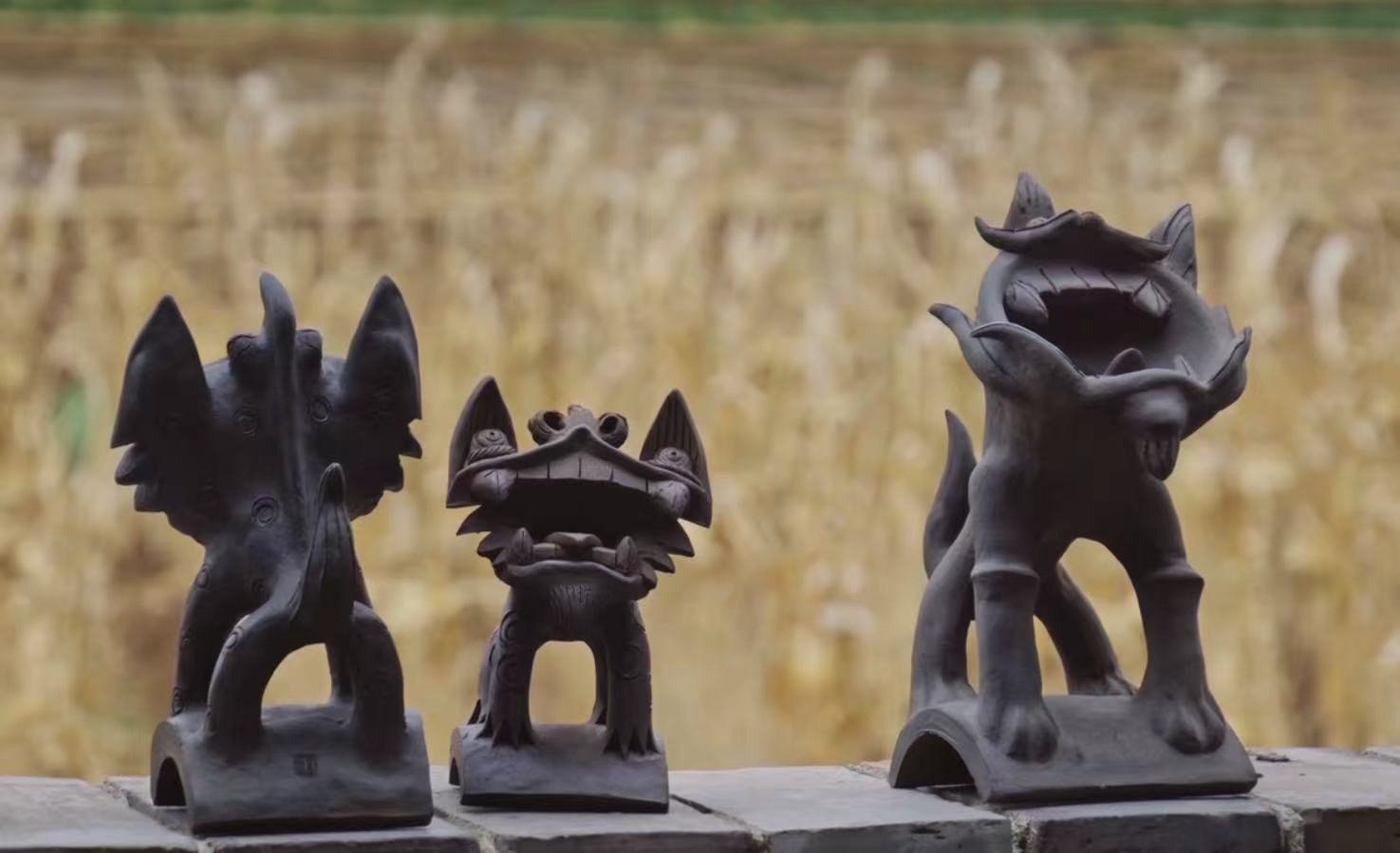
In the periphery of Chuxiong, central architectural norms are thoroughly deconstructed. The indigenous Yi and Bai ancestors possessed profound animistic beliefs and tiger totem worship (the Yi creation epic, Meige, states: ‘The tiger’s bones are the columns that prop up the sky, its flesh becomes the vegetation’). Artisans abandon the pottery wheel entirely for free, pure hand-molding. To maximize its defensive function of ‘swallowing evil,’ the head swells disproportionately with monstrous fangs, defying anatomical logic. It is a successful indigenous ‘Possession’ of the imperial norm.

Lijiang: The Primal Descent
In the remote areas of Lijiang, the Naxi region, the ‘cat’ disguise is entirely stripped away. The Wamao ceases to have any rational symmetry; it is a manifestation of primal terror, molded raw and dark from the red earth. It is a raw roar against a cruel nature and unknown spirits—the final form where the totem breaks free from the empire’s shadow to stand alone.
Chapter III · The Linguistic Disguise
Why call a fierce, house-guarding tiger… a docile ‘cat’?
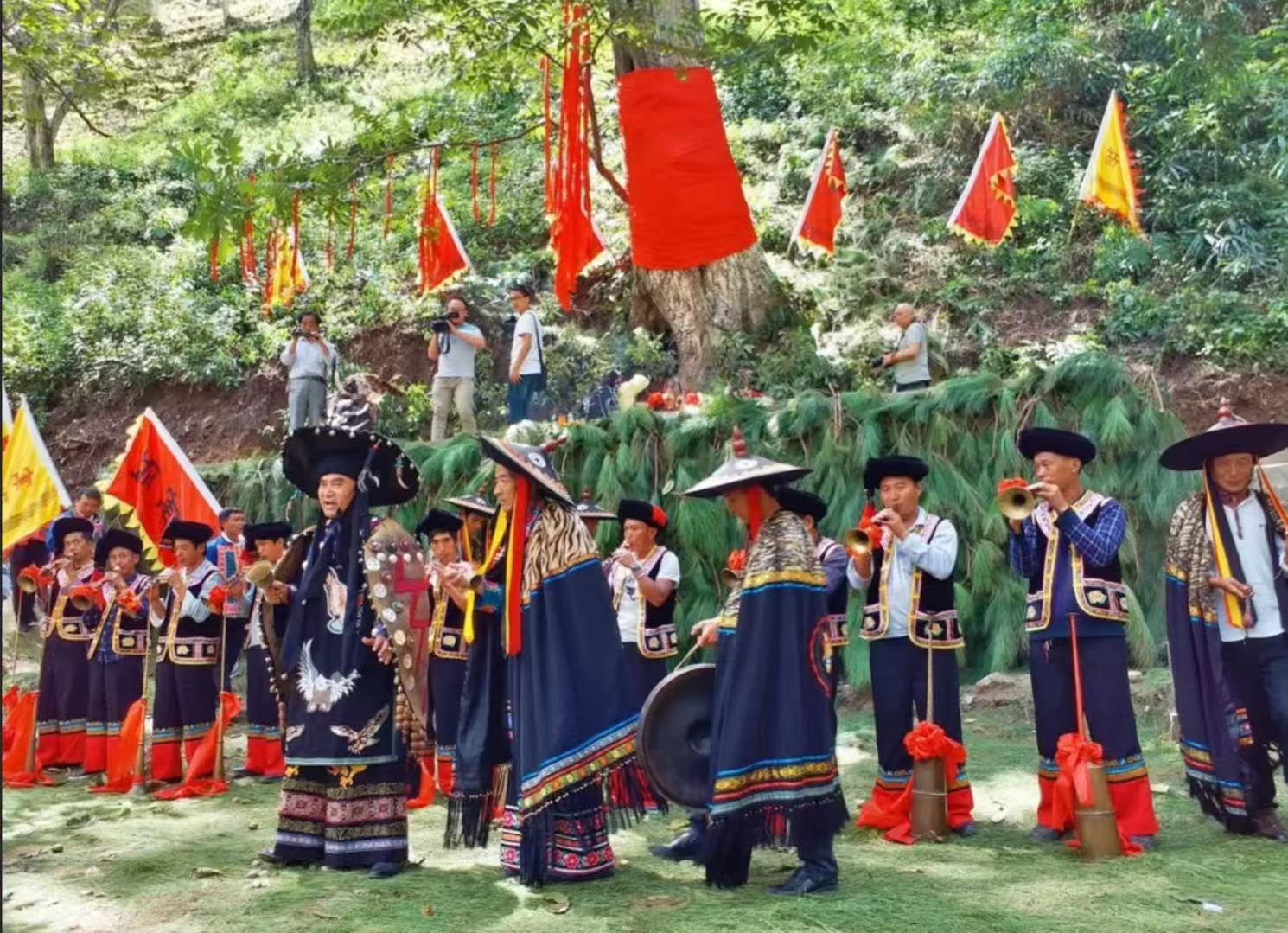
The Weight of a Name
In the ancient logic of sympathetic magic, a name is not just a label; it is the entity itself. To explicitly call upon a ‘Tiger’ on your roof might summon the real, man-eating beast from the dark mountains. The fear was physical.
The Psychological Compromise
So, the artisans engaged in a cunning linguistic disguise. They molded a monster, but named it a ‘Cat’. By domesticating its title, they tamed its wild ferocity, achieving a perfect psychological balance between protection and safety.