THE INQUIRY
I grew up in Yuxi, Yunnan. In eighteen years, I never saw a Wamao in any house, any temple, or any rooftop. Then, around 2020, it appeared: on Douyin livestreams tagged “Intangible Cultural Heritage,” in blind-box collections on Xiaohongshu, on government banners along a newly built cultural street called Qinghua Jie.
A creature I had never encountered was suddenly everywhere, claiming to be ancient.
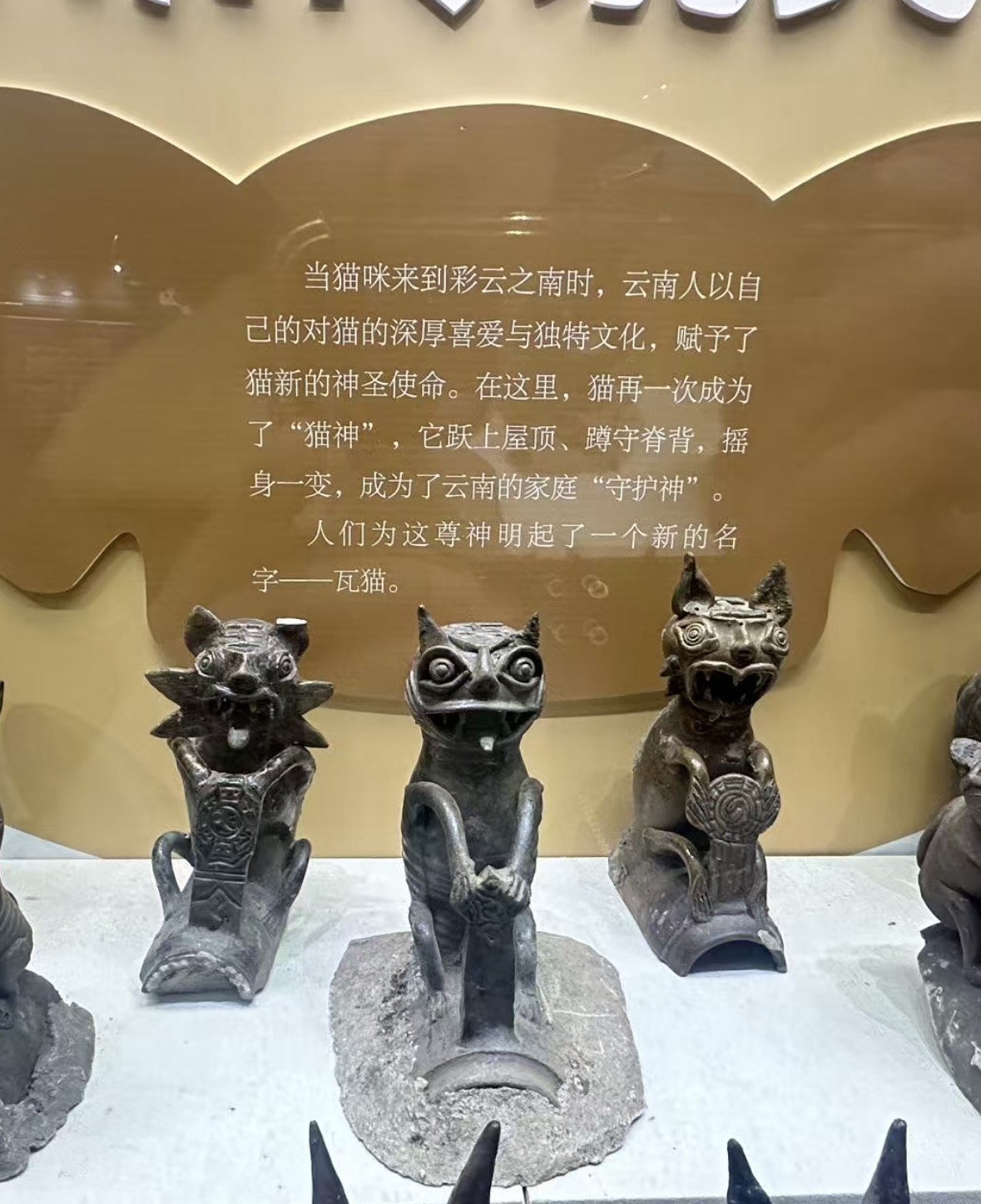
That puzzled me, because the Wamao is not a homegrown product of Yuxi. Across Yunnan, roof-guardian figures have deep and genuine roots: in Heqing, where Bai-ethnic potters have crafted them for generations as part of a house-building ritual called “sealing the dragon’s mouth” (Ma Jia, 2018); in Binchuan, where Han-Chinese settlers brought them along pilgrimage routes to Jizu Mountain (Ma Jia, 2022a). But Yuxi had none of that. The artisans I later interviewed had no family lineage in Wamao-making. The workshops I visited had all pivoted to Wamao production after 2013, when local government launched a cultural tourism campaign. My grandmother remembers seeing Wamao figures on rooftops when she was young: people kept them for luck, rubbed them before mahjong games, occasionally placed one facing a wealthier neighbor’s house to “draw their fortune over.” But as she put it, this was a minor folk habit tied to old courtyard houses, not something anyone would have called a community tradition.
So I spent seven days in June 2025 embedded in two Yuxi workshops, talking to four people who make or sell Wamao for a living, and learning to shape clay alongside them. I also scraped 200 Xiaohongshu posts and classified their content to see what happens to this object once it enters the consumer internet. And I read through the academic literature (the ethnographies, the art-historical analyses, the policy documents) to understand what scholars already know and where the gaps are.
Seven Days in Yuxi
This section is a narrative account of my fieldwork rather than a set of raw field notes: it draws on the notes I took each day in Yuxi, together with relevant scholarship, to present what I observed in context. Quotations are translated from Chinese and reflect the substance of what was said.
Qinghua Street
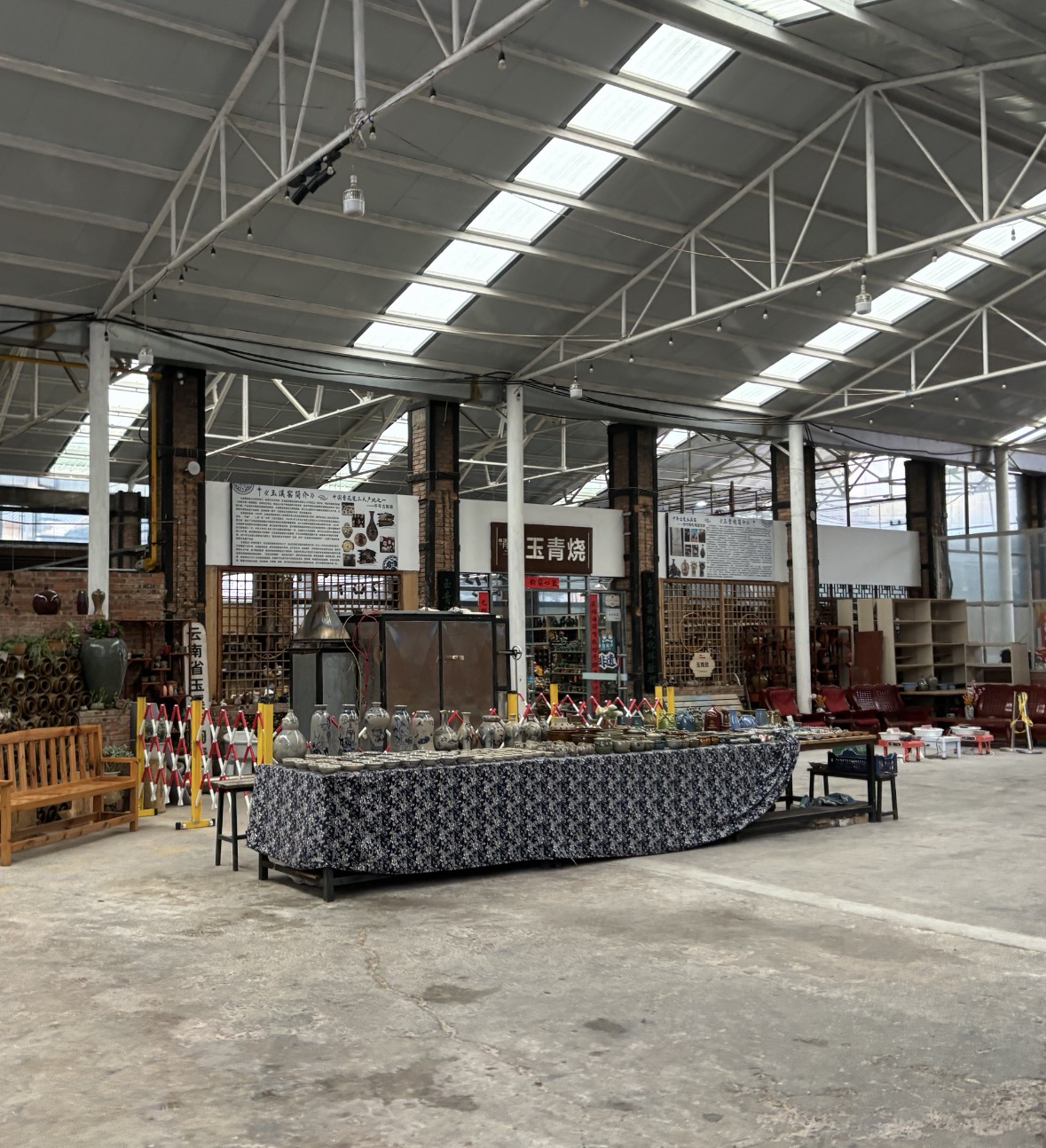
Qinghua Street was purpose-built. Yuxi is a tobacco city, the home of the Hongta Group, one of China’s largest cigarette makers. According to figures published by the Yuxi Municipal Bureau of Statistics in July 2024, tobacco still accounts for 60 to 70 percent of the city’s above-scale industrial output. Its taxes once funded virtually everything. But in 1994, the State Council’s tax-sharing reform redirected tobacco excise revenue to the central government, and by 2001 the Hongta Group’s annual tax contribution had fallen from over 20 billion yuan to roughly 12.7 billion, a drop of more than 30 percent (MBA Library; Sohu News, citing contemporary financial reporting). The city needed something else. In January 2013, Yuxi’s party secretary Zhang Zulin stood up at the provincial People’s Congress and declared that the city would “vigorously develop the modern service sector, led by tourism” (Yuxi Municipal Government, “2013 Year in Review”). That same year, the municipal government released its Cultural Tourism Strategy and the Kun-Yu-Hong Tourism-Culture Industry Belt Action Plan (Yuxi Municipal Government, 2014), and a local kiln successfully refired blue-and-white porcelain (a technical achievement, it turns out, that had already been accomplished privately by a single artisan back in 1992). In 2014, Yuxi blue-and-white porcelain received provincial-level ICH status (Yunnan Gateway, 2020). In 2019, the city broke ground on a 4.5-billion-yuan ceramics art town (Yunnan Daily, 2024; Yuxi Municipal Government, 2024). Qinghua Street, which opened in October 2020, is its commercial centerpiece.
The street is lined with red brick facades, calligraphy banners, and the words “Intangible Heritage” printed on every awning. It was originally pitched as a cultural-creative hub, then drifted into a food street, and has only recently swung back toward heritage branding. At the entrance to Yuqing Kiln, a shelf of Wamao fridge magnets greeted us by the door. Inside: two people shaping clay at long worktables in a brick-walled courtyard. At the back, a half-height kiln.
Yang Ayi, a shop attendant, walked me through the product logic. Stick a miniature Wamao onto a ceramic cup, and the price goes from 60 to 140 yuan. The figures with coins sell best: the green ones, with a big open mouth. If the coin is inside, the back is sealed, so the wealth stays in. No coin means the back is left open, to pull fortune in from outside. I asked about the original meaning of the open mouth, the spirit-swallowing function documented in the ethnographic literature. She did not mention it. Nobody in the shop did.
[ Animated · scroll ]
How a heritage industry got funded
Scroll through three charts: tobacco's grip on Yuxi, the tax collapse that gutted that revenue, and the tourism build-out the city turned to next.
Yuxi is a tobacco city, the home of the Hongta Group, one of China’s largest cigarette makers.
But in 1994, the State Council’s tax-sharing reform redirected tobacco excise revenue to the central government, and by 2001 the Hongta Group’s annual tax contribution had fallen from over 20 billion yuan to roughly 12.7 billion, a drop of more than 30 percent.
The city needed something else.
In January 2013, Yuxi’s party secretary Zhang Zulin stood up at the provincial People’s Congress and declared that the city would “vigorously develop the modern service sector, led by tourism.”
The Woman Who Pivoted
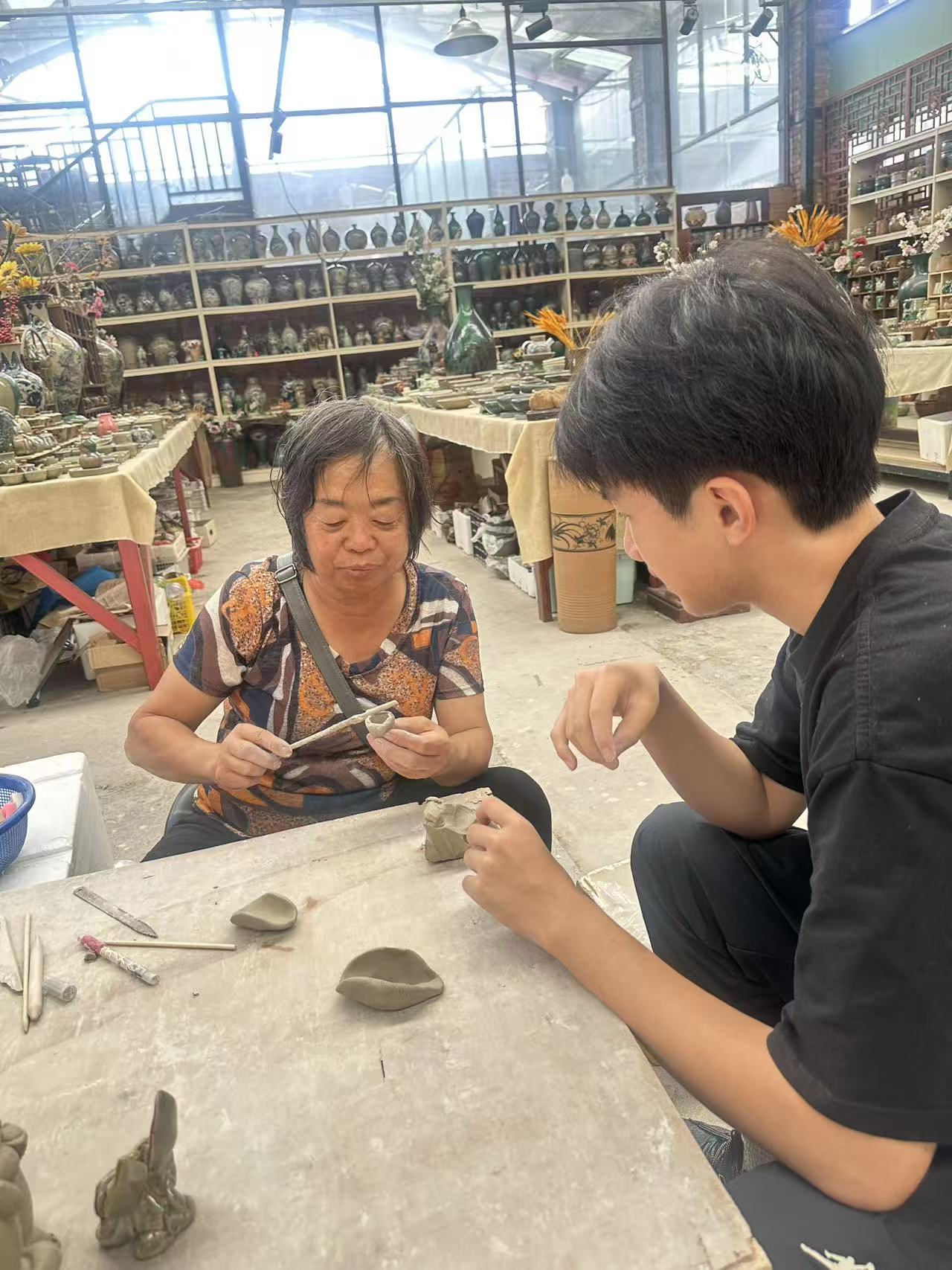
Zheng Popo is not a Wamao artisan. She is a ceramicist who spent twenty years making glazed roof tiles alongside her husband, Liu Jialiang. Between 2002 and 2013, their main business was tiles and building materials. She had never made a Wamao in her life.
That changed when the city’s cultural-industries push began. Around 2013, a government agency called the Hongta District Cultural Industries Office started connecting workshops to trade fairs and providing promotional channels. Zheng Popo saw an opportunity: Wamao were cheap to make, easy to transport, and increasingly in demand at the fairs. She started producing them, not out of any attachment to the tradition but to keep the workshop running.
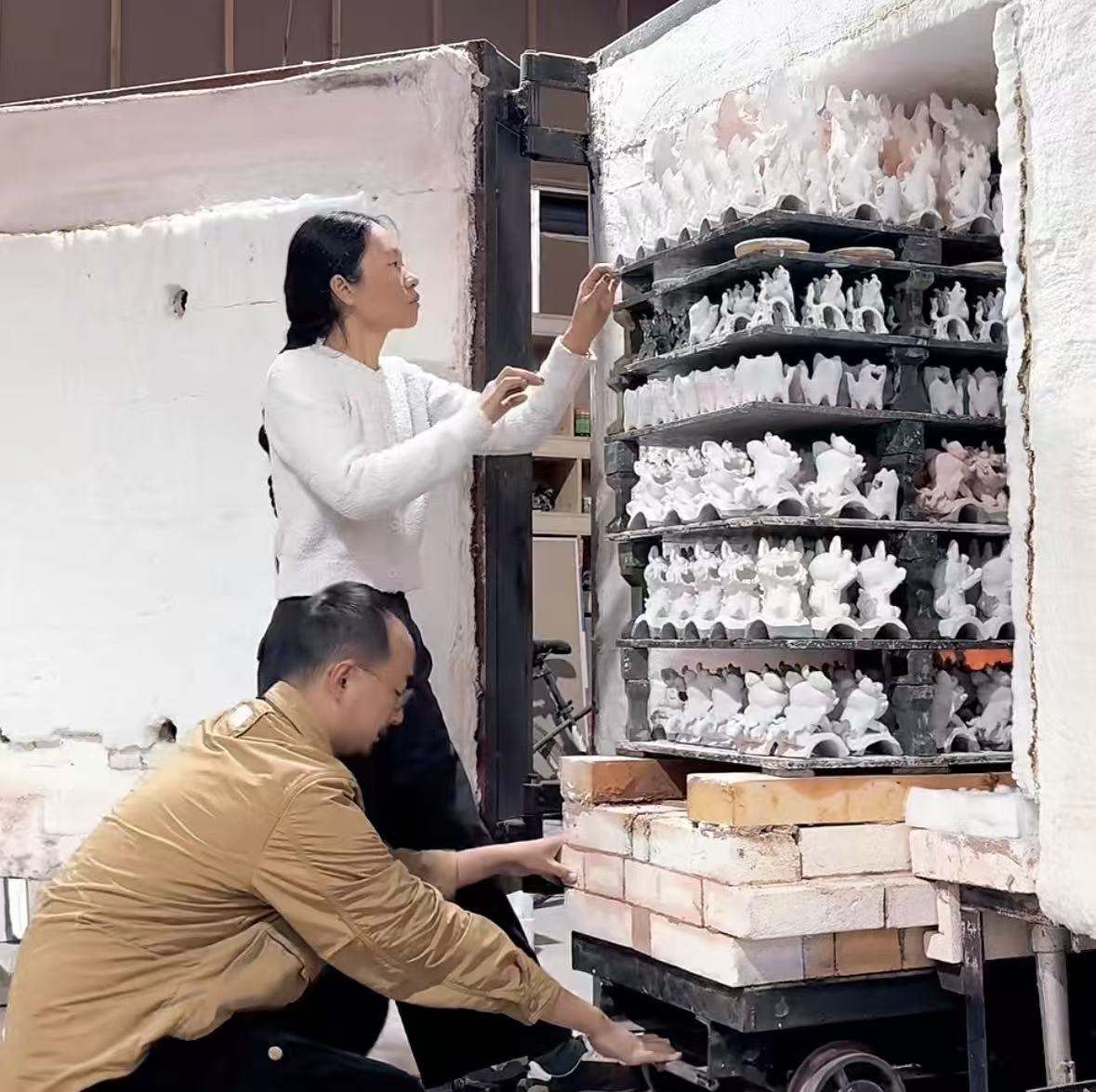
Today her operation has a clear division of labor: she molds the clay bodies in bulk, her daughter-in-law paints them, and her son handles the finishing and firing. They produce for wholesale: 200 to 300 pieces at a time, costing 50 to 200 yuan per unit, retailing at roughly double in tourist areas. Walk-in local sales barely exist. In the two days I spent sitting in the shop, almost no one from Yuxi came through the door. The visitors were tourists from out of town, browsing, occasionally picking something up and putting it back.
Around 2017, the Cultural Industries Office was folded into the Municipal Bureau of Culture and Tourism. Zheng Popo’s account of what changed is sharp: she says the new bureau turned cultural support into a transaction, that awards and market access now go to people with money or connections rather than skilled craftspeople. I have no way to independently verify that claim, and she has known tensions with other workshops in the area, so I present it as what it is: one artisan’s experience of a felt shift in how the system works. But the bitterness in her voice was real, and it came up more than once.
The Kiln Guardian
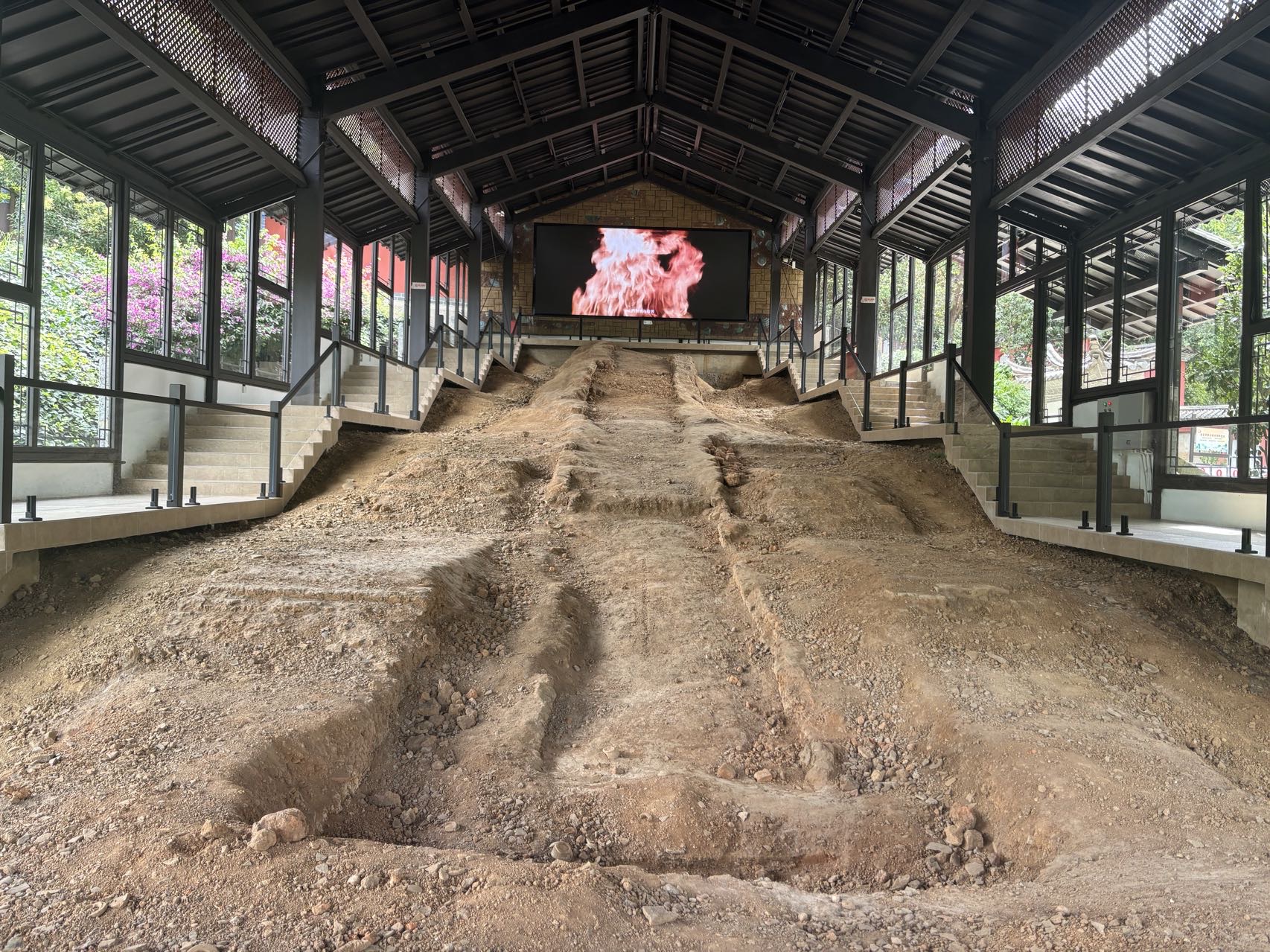
Liu Jialiang, Zheng Popo’s husband, did not want to talk about Wamao. He wanted to talk about the kiln.
He is a man whose life runs on ceramic infrastructure. He started learning to make pottery and mix glazes as a teenager, rose to become technical deputy director of the Yuxi Municipal Kiln Factory, and in 1992, when the Yuxi Dragon Kiln archaeological excavation turned up shards of blue-and-white porcelain, he was the one who figured out how to reproduce the technique. No formula survived; he developed his own glaze composition and firing process from scratch. This was two decades before the city government officially announced the “revival” of Yuxi blue-and-white porcelain as part of its 2013 cultural-tourism push. The revival had already happened, quietly, in one man’s workshop.
In 1993, frustrated by what he called cronyism in the state-run kiln system, Liu left and started his own business. The Yuxi Municipal Kiln Factory was eventually taken over and repurposed. Its former site, on a road still called Ancient Kiln Road, is where Liu chose to set up his current workshop. He moved there on purpose. “The root of Yuxi ceramics is here,” he told me. “You can’t surrender this land to food vendors.”
He does not make Wamao. Blue-and-white porcelain, glaze chemistry, kiln construction: those are his domains. The workshop started producing Wamao only around 2020, because customers kept asking for them. For Liu, they are a side product, not a calling. His energy goes into the infrastructure: he has lobbied the Bureau of Culture and Tourism to waive rent for young artisans who might set up workshops in the area. They turned him down.
There is an irony here that Liu himself does not dwell on but that the project cannot ignore: the man who literally re-created Yuxi’s ceramic heritage from archaeological fragments now occupies a workshop where the bestselling item is a product he considers peripheral, and that product is the one the city calls its “intangible cultural heritage.”
It Was Never Anything
Li Ping’s studio, Wamao Daren, occupies a residential building about ten minutes from the city center. She and her husband Wang Ziqiang studied ceramics together at university. In 2013, still students, they picked the Wamao as their direction, “because it was cute to make, and nobody else was doing it.” After graduating in 2015, they launched the studio. Today it is the largest Wamao brand in Yuxi.
Li Ping is the most clear-eyed person I met about the nature of what she sells. “Wamao was never anything to begin with,” she told me. “As long as you keep the giant open mouth, you can do whatever you want with it.” She said this not as a confession but as a design principle. The absence of a fixed form is, for her, creative freedom.
Wamao was never anything to begin with.
Her real frustration is not about authenticity but about marketing. After ten years, the brand is still mid-tier. The problem, she believes, is that the Wamao lacks a story. “If only it were like the Broken Bridge and the White Snake Lady,” she said, naming the Hangzhou legend that turns a place into a destination. “We don’t have anything like that. We don’t have a story that sticks.”
She used a word that stayed with me: “laundering.” She borrowed it from a case study of a funeral home that had been redesigned to look like a luxury boutique, “the kind of place you’d actually want to walk into.” What the Wamao needs, she said, is something similar: a reframing that makes people accept its presence in their daily lives, “giving it a meaning that goes beyond what it physically is.”
I asked about the time the Wamao first went viral. Merchants who had no stock, she told me, filled orders with stone lions shipped in from Fujian province. The lions sold just fine. “Tourists don’t care about origins,” she said. “They don’t care what’s inside.”
In a market where a Fujian lion can stand in for a Yunnan cat and nobody notices the difference, the question of what the Wamao “really is” starts to matter less than the question of who gets to decide what it means, and who profits from the answer.
If today's Wamao is a modern invention, what is the real history it claims to inherit?
ACT II: Historical Background
What scholars have found: the deep history, regional diversity, and ritual life of the Wamao across Yunnan.