[ ACT II · LITERATURE REVIEW & HISTORY ]
A past more complicated
than the label.
The Wamao’s past is more complicated than the “600-year-old heritage” label suggests, and less settled than any single origin story would have you believe.
Where Act I documented the fieldwork, this Act turns to the scholarship: a review of what scholars have found about the deep history, regional diversity, and ritual life of the Wamao across Yunnan, drawing on a literature review of eleven studies published between 2002 and 2025.
This project does not attempt a comprehensive survey of Yunnan’s Wamao traditions; that work has been accomplished by scholars including Ma Jia (2018, 2022), Lu Jun & Sirivesmas (2025), Cao Anli & Xin Beini (2025), and Wang Xinyuan (2024).
Scholars have proposed at least five different theories about what the Wamao originally was:
- 01
a domestic cat protecting grain stores, rooted in Neolithic agricultural settlements (Wang Xinyuan, 2024)
- 02
a stand-in for the tiger, linked to Yi and Bai ethnic cosmologies (Yang Zhaolin, 2002)
- 03
an owl or phoenix from Han-dynasty funerary traditions
- 04
a composite creature blending features of the chiwen ridge-swallower, the ao fish, the xiezhi, and the jiaoduan, four mythical beasts from the Chinese architectural vocabulary (Cao Anli & Xin Beini, 2025)
- 05
or a practical smoke-ventilation device whose spiritual overlay was added later, as evidenced by soot marks found inside door-mounted Wamao in Yiliang County (Wang Xinyuan, 2024)
There is no consensus, and the name “Wamao” itself turns out to be a regional label from central Yunnan that scholars adopted as a province-wide term, not a universal folk name (Ma Jia, 2022).
What is clear is that the Wamao’s history cannot be separated from the history of migration and kiln culture in Yunnan.
1381 — The Great Expedition
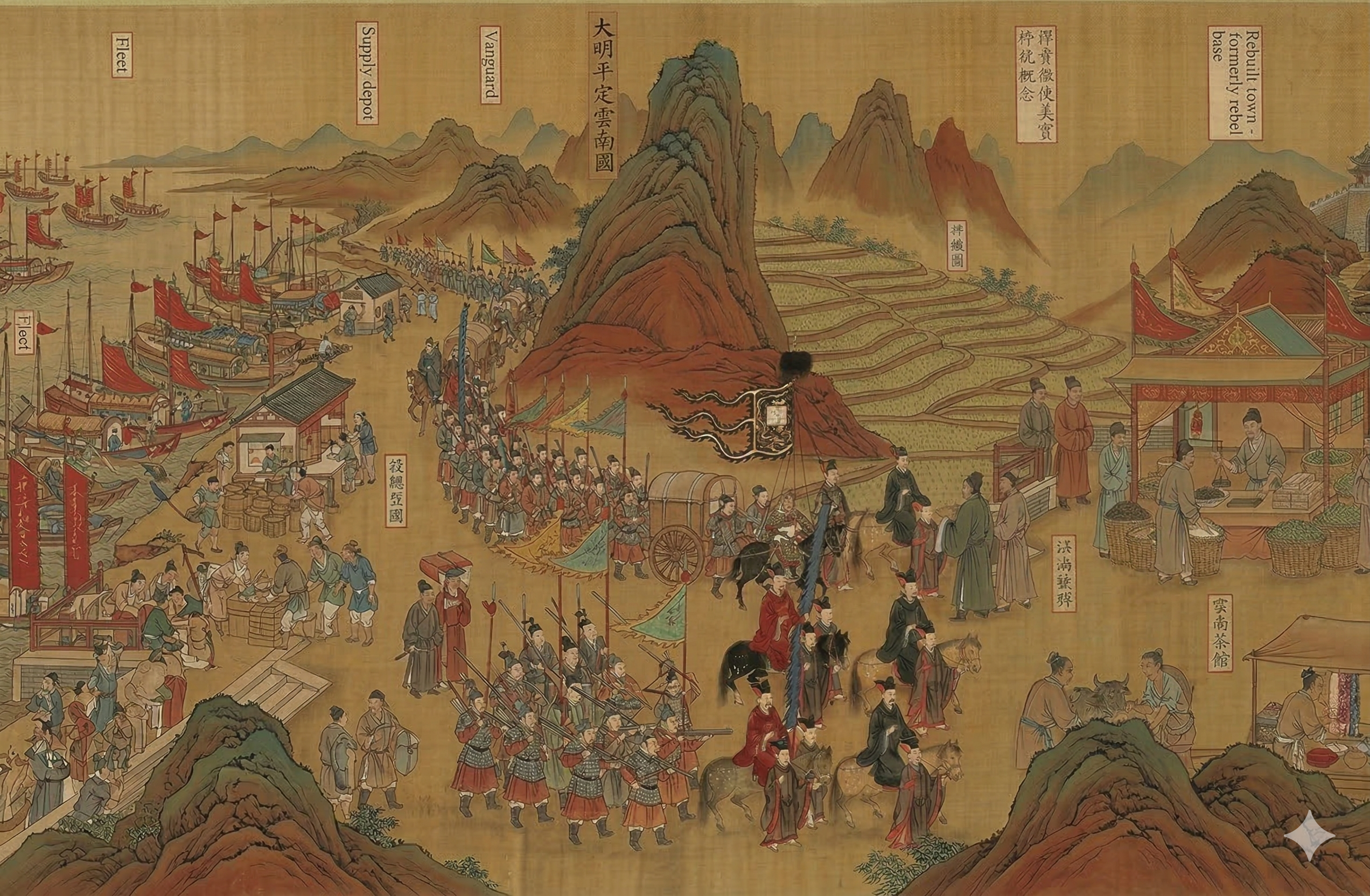
1381 • The Great Expedition
In 1381, the Ming Dynasty sent 300,000 troops into the southwestern frontier under General Fu Youde. Soldiers were settled as military colonists (军屯), given land to farm, and expected to hold the border permanently.
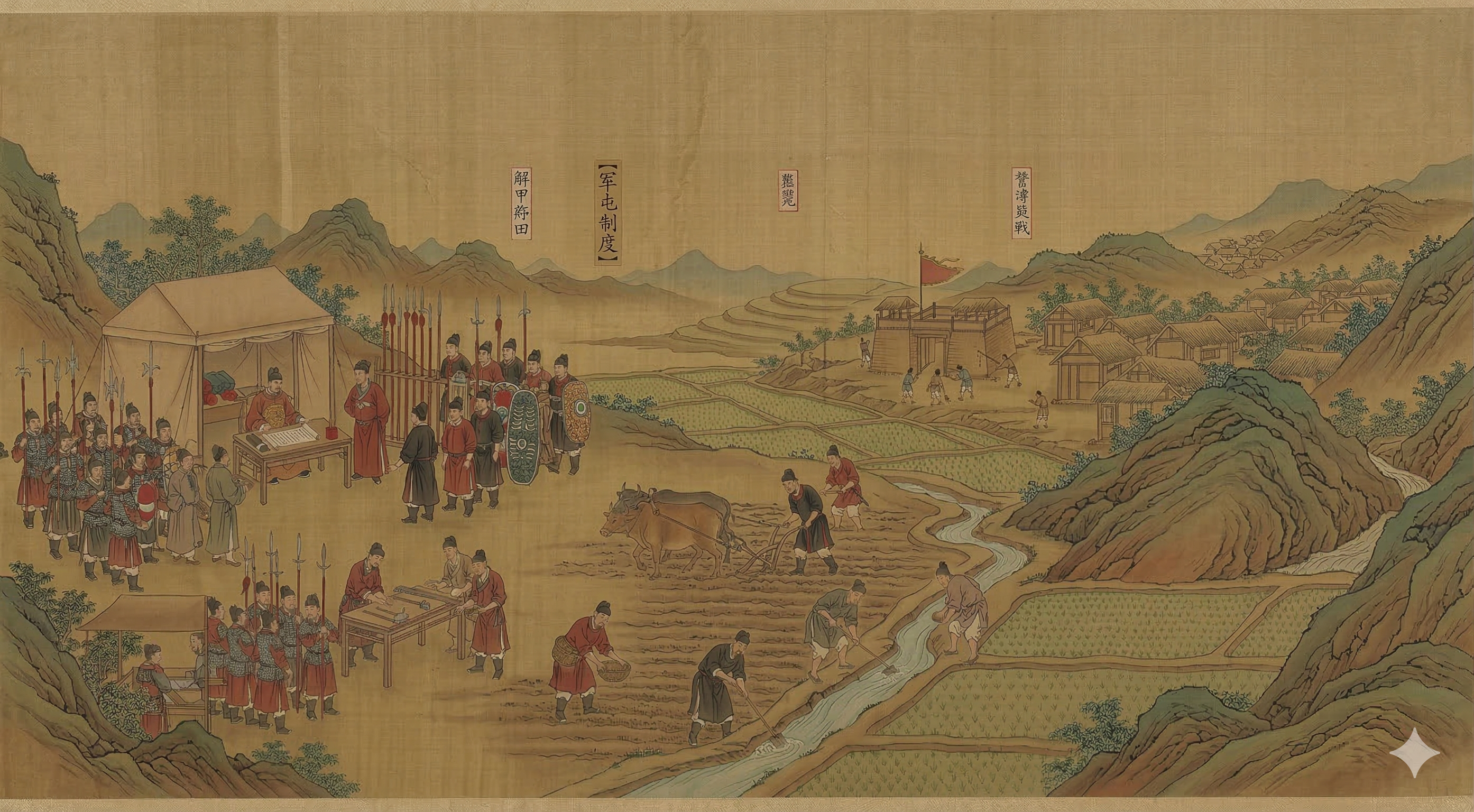
Beibanbang • Founded 1382
In the Heqing region, ethnographic fieldwork has confirmed that the village of Beibanbang, one of the best-documented centers of Wamao production, was founded by Han Chinese military settlers who arrived in 1382 under General Lan Yu (Ma Jia, 2018). These settlers built courtyard houses modeled on Central Plains architecture, and they brought the practice of placing guardian figures on roof ridges.
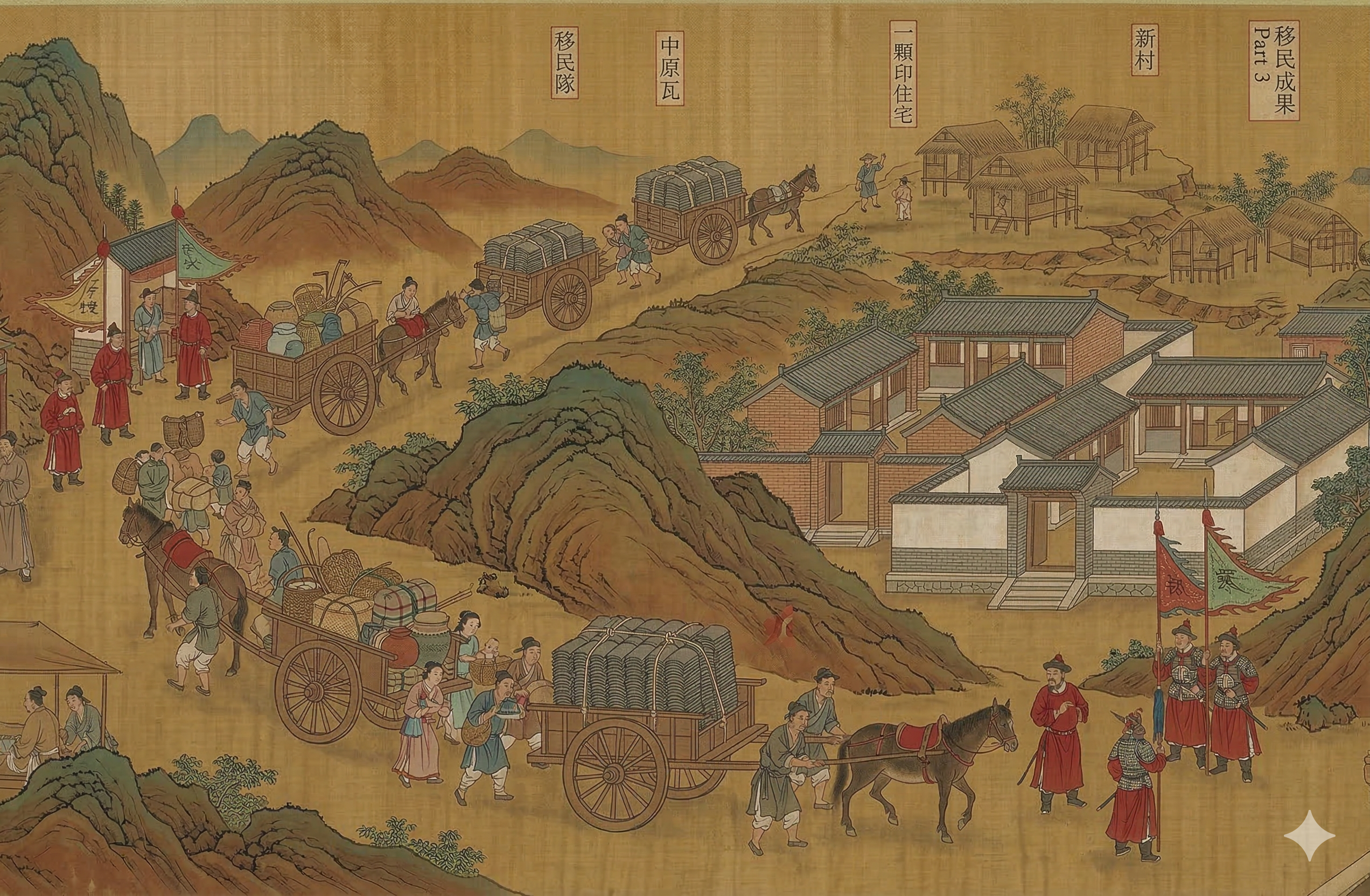
Kilns for Brick, Kilns for Wamao
The kilns these colonists built to fire bricks for their new homes also fired the earliest Wamao prototypes. The ethnographer Ma Jia has argued that Wamao production is structurally tied to the brick-and-tile industry: “Where there are no brick kilns, there are no Wamao” (Ma Jia, 2018).
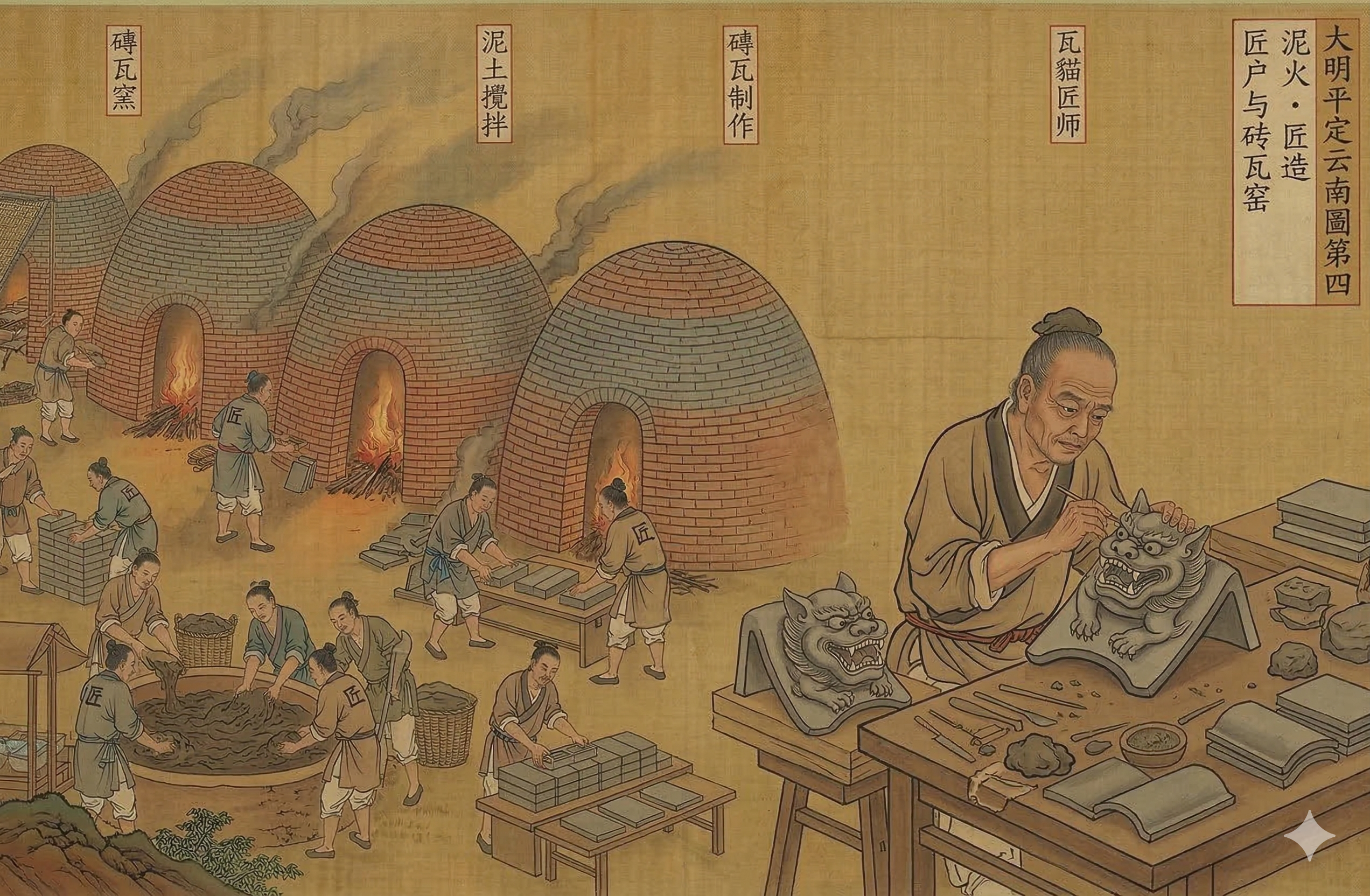
Side Products of the Kiln
The figures were not made by specialist craftsmen. They were side products, shaped from leftover clay by kiln workers as favors for neighbors who were building new houses. In the village of Beibanbang, an elderly worker recalled that in the old days, “if you were friends with someone, you’d make one for them during your spare time at the kiln, and fire it alongside the regular batch of tiles” (Ma Jia, 2018).
The Craft:
How a Wamao is Made
The making of a traditional Wamao, as documented in the kilns of Heqing, follows four stages.
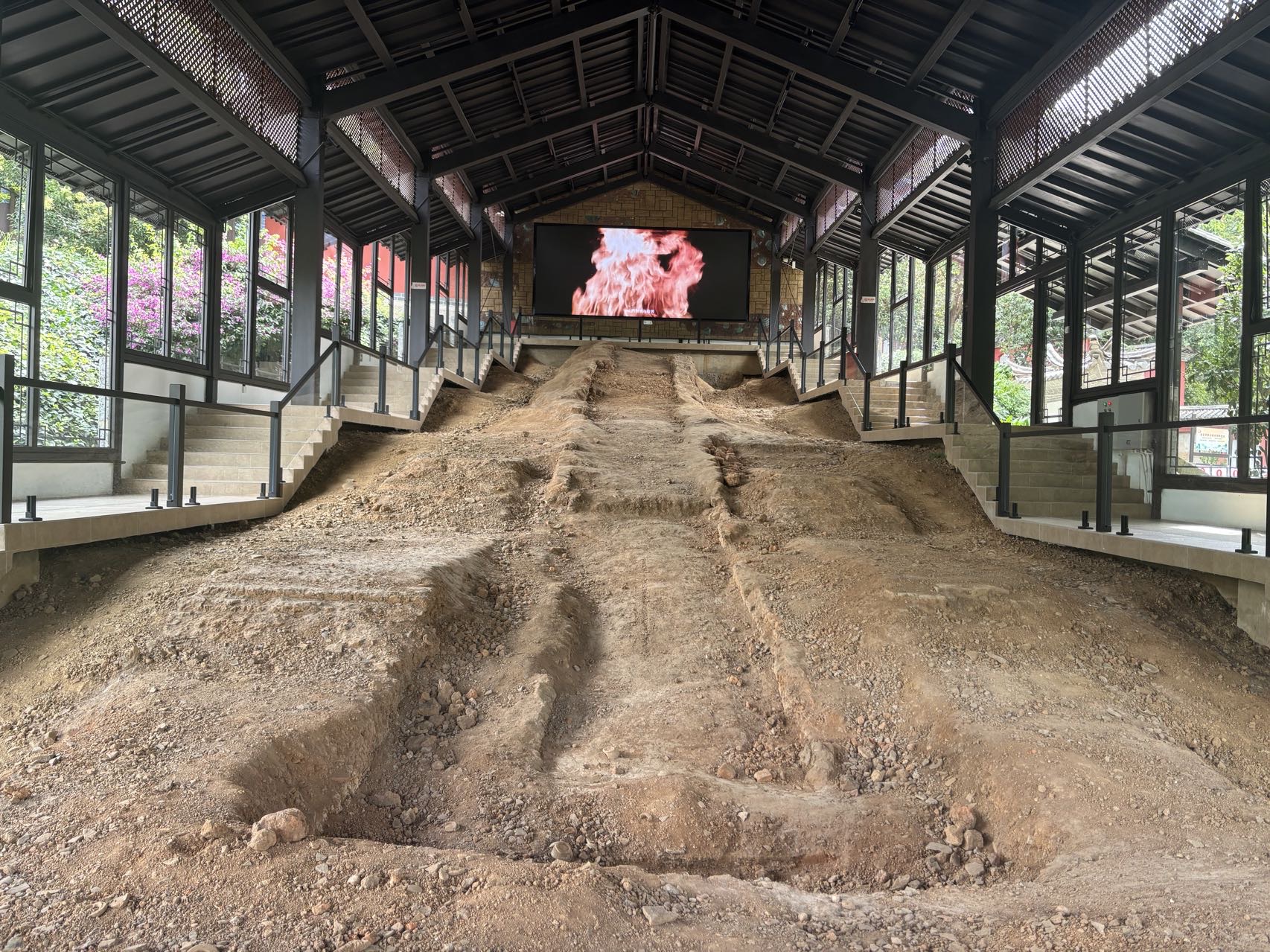
Gathering the Earth.
Artisans use locally sourced red or black clay, the same material used for bricks and roof tiles.
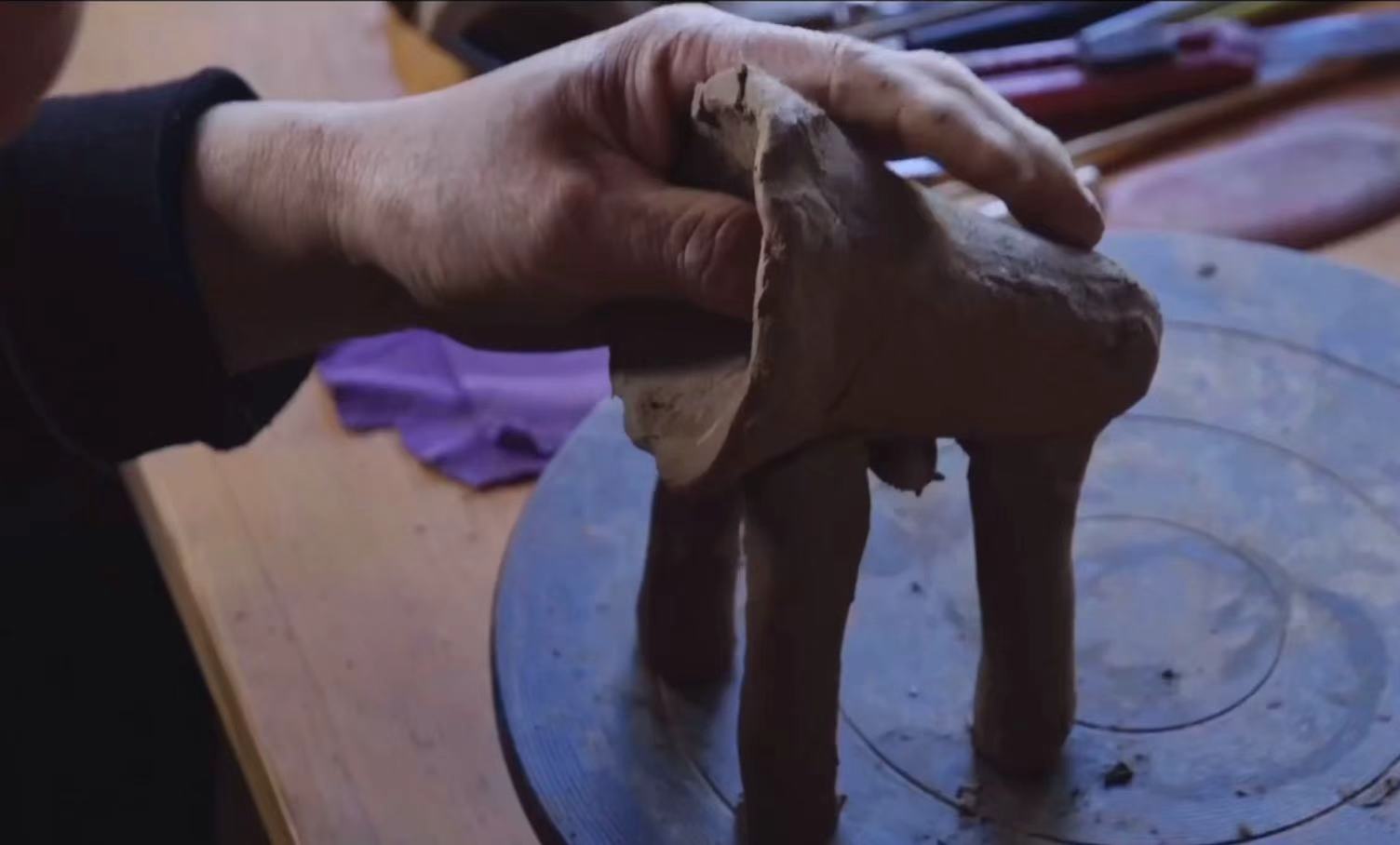
Shaping the Body.
In Heqing, the Wamao is entirely hand-molded without molds. In Binchuan, artisans use a different method: carving the figure from a solid clay block.
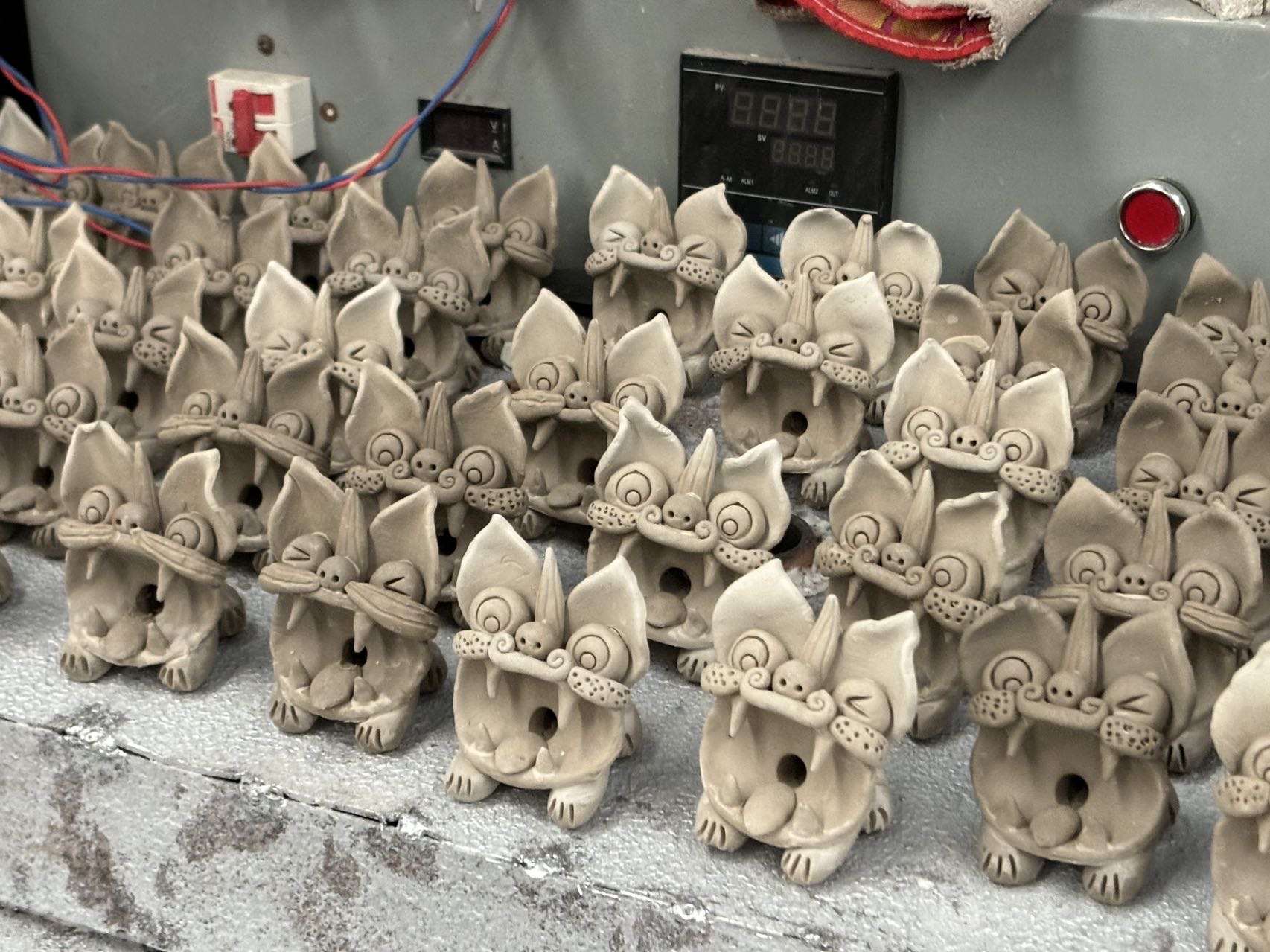
Awakening the Face.
The face is the hardest part. Using fingers and a few simple tools, the artisan sculpts bulging eyes, flared nostrils, and the defining feature: the wide-open mouth.
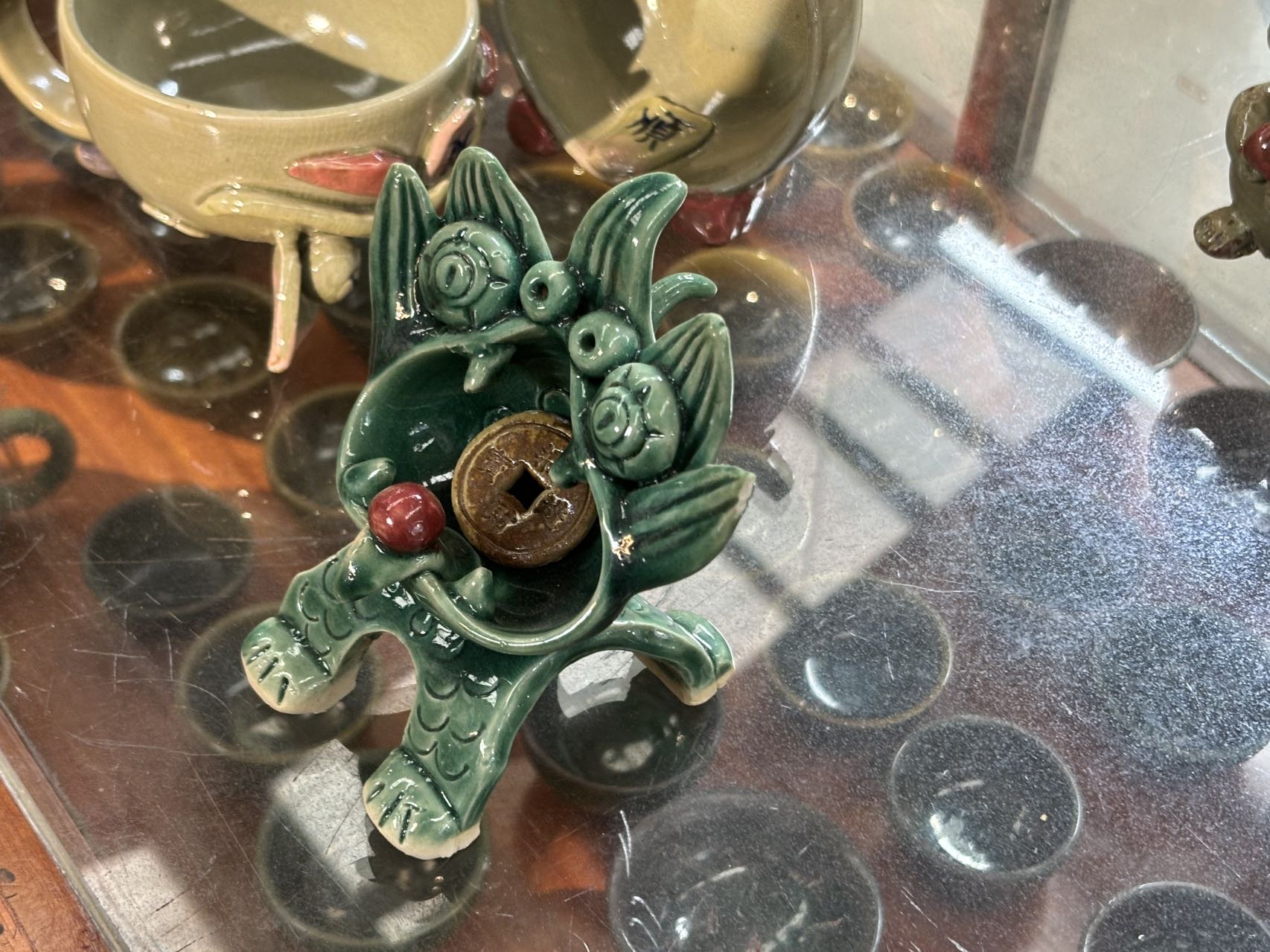
Trial by Fire.
Traditional Wamao are fired in dome-shaped coal kilns known locally as "black-tile kilns," at temperatures between 1,000 and 1,400 degrees Celsius.
Gathering the Earth. Artisans use locally sourced red or black clay, the same material used for bricks and roof tiles. In Beibanbang village, the clay comes from a deposit called Nangongyu, covering over a thousand acres between the village and its neighbor. The best clay is low in sand, slightly white, and highly plastic. It costs 60 to 80 yuan per cartload. One master artisan, Gao Jinfu, a nationally recognized ICH inheritor, uses roughly 30 tons per year (Ma Jia, 2018).
Shaping the Body. In Heqing, the Wamao is entirely hand-molded without molds. In Binchuan, artisans use a different method: carving the figure from a solid clay block. Either way, the body is left hollow, which serves both an acoustic and a symbolic function: elder craftsmen say that when wind passes through, the Wamao produces a low moaning sound (Ma Jia, 2018). The hollow body also carries the meaning of “swallowing iron and excreting gold,” a prosperity metaphor that persists in the commercial versions made today. A skilled artisan can finish one in about an hour; a husband-and-wife team may turn out 17 to 20 in a day.
Awakening the Face. The face is the hardest part. Using fingers and a few simple tools (a cutting bow, a small knife, a bamboo tube), the artisan sculpts bulging eyes, flared nostrils, and the defining feature: the wide-open mouth. Five or six fangs are individually attached. Ears are scored with fine lines. Ma Jia (2018) calls this step “the most demanding test of the maker’s skill and the key moment of the Wamao’s formation.”
Trial by Fire. Traditional Wamao are fired in dome-shaped coal kilns known locally as “black-tile kilns,” at temperatures between 1,000 and 1,400 degrees Celsius. A full cycle runs 17 to 18 days: one or two days loading, seven or eight days burning, six or seven days cooling with water poured over the kiln, and another day or two to unload. The figures come out unglazed. Their color (ideally a blue-grey, “neither black nor red,” as kiln masters describe it) depends entirely on temperature control (Ma Jia, 2018).