[ THE YEAR 1381 ]
WA MAO
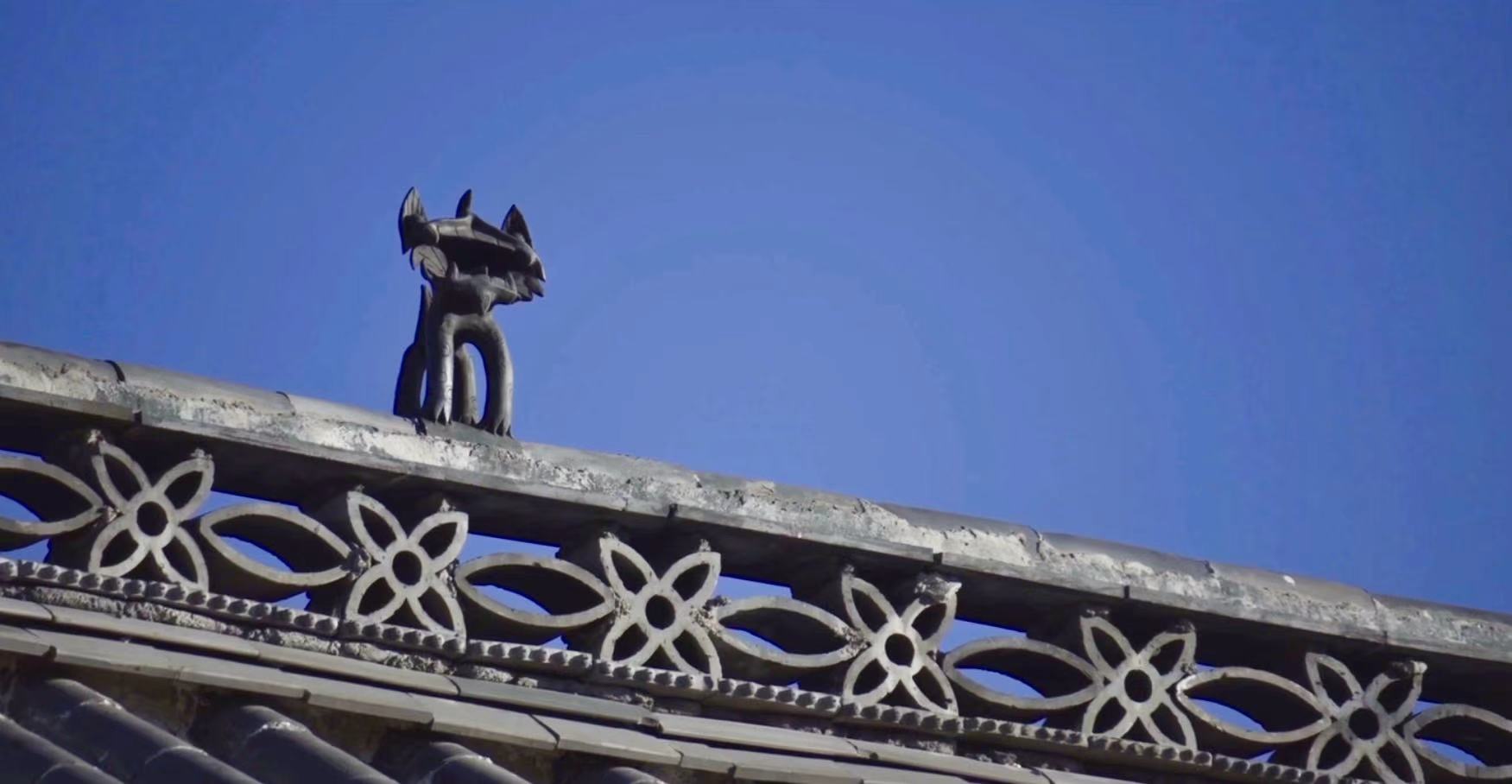
The Wamao (瓦猫, literally “tile cat”) is a clay guardian figure placed on the rooftops of traditional houses across Yunnan, southwestern China. Across the province it goes by different names, for example “ridge-taming tiger” (降脊虎) in Heqing, “clay cat” (土猫) in Binchuan, “unicorn” in Jianchuan (Ma Jia, 2022). The word “Wamao” itself is a central-Yunnan term that academics later adopted as a province-wide label for these mythical-beast figures; it is not a name all the makers themselves use (Ma Jia, 2022). This project traces how that label, and the object it names, became the centerpiece of a heritage industry in a city that never had one.
A digital archive of clay, fire, and memory.
This project is an independent research archive dedicated to the Yunnan Wamao. It documents a cultural object whose origins remain debated among scholars. This project traces its recent history, documenting the evolution of Wamao from … onwards. Since 2013, the city of Yuxi has transformed this figure from a little-known folk item into a branded cultural product marketed under the banner of “Intangible Cultural Heritage”, a provincial-level designation the Wamao itself only officially received in 2023 (Wang Xinyuan, 2024).
Through fieldwork in Yuxi’s workshops, digital analysis of China’s social media platforms, and engagement with the academic literature on Yunnan’s architectural traditions, the goal of this project is to answer a simple question: what is the cultural and social significance of a city adopting, branding, and selling as its own heritage an object it never traditionally possessed?
Fieldwork in Yuxi: four artisans, two workshops, and a heritage industry built from scratch.
What scholars have found: the deep history, regional diversity, and ritual life of the Wamao across Yunnan.
How 200 Xiaohongshu posts reveal what happens to a cultural object when it enters the consumer internet.
Fieldwork Experience
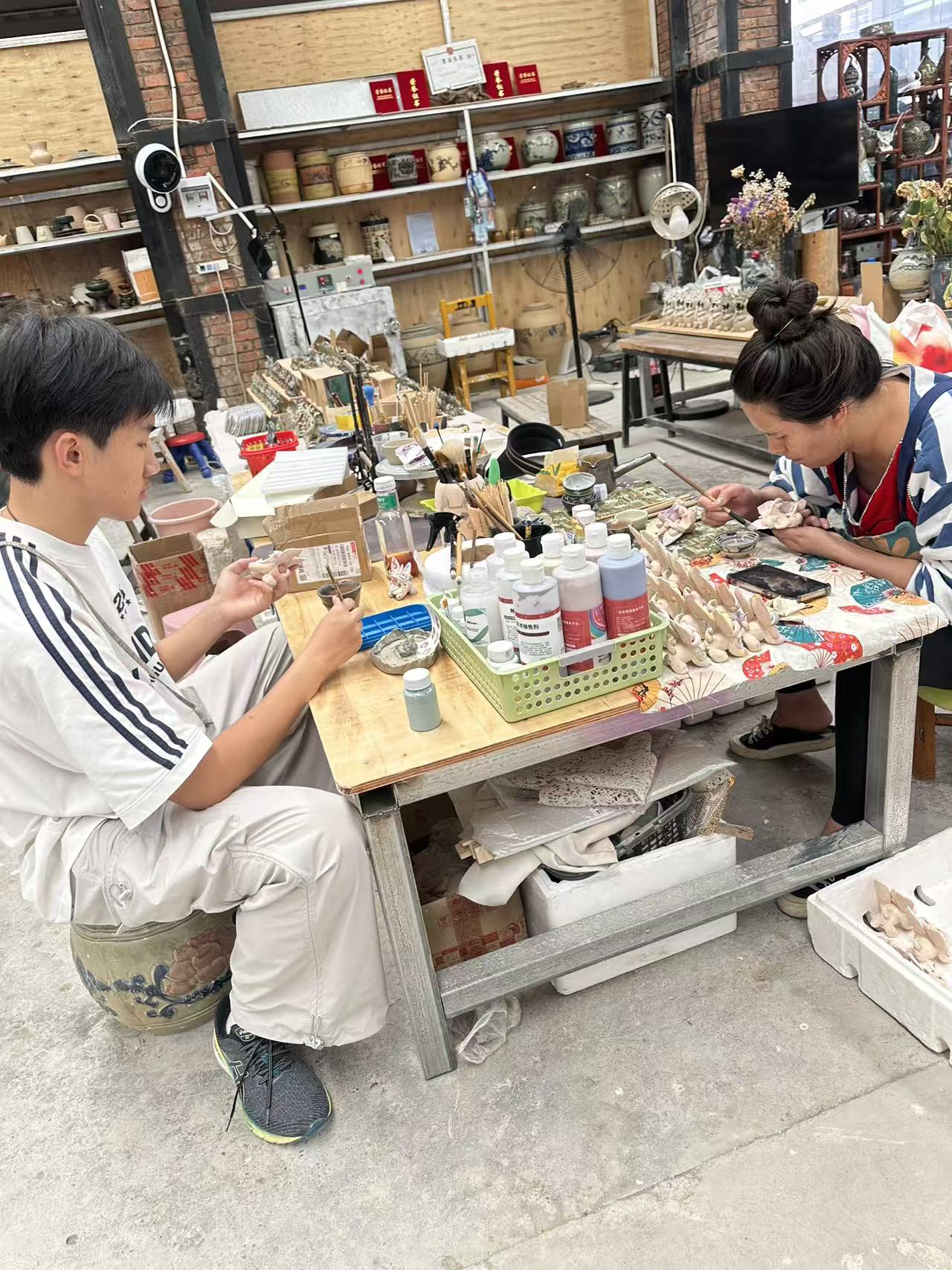
This archive is grounded in qualitative fieldwork I conducted in Yuxi, Yunnan Province, from June 16 to June 22, 2025. Over seven days, I interviewed four artisans and workshop personnel across two active ceramic workshops, focusing on how they produce Wamao, how they sell them, and what they think the objects actually mean. I also spent time learning the craft myself: shaping clay alongside the potters, getting a feel for the material and the labor that goes into each figure. Alongside this fieldwork, I collected 200 Xiaohongshu (Little Red Book) posts tagged with “Wamao,” scraped by keyword, and classified their content to see how this object is spread and understood in China’s digital consumer culture.
All quotations in this project are drawn from detailed field notes I took during and immediately after semi-structured interviews; they reflect the substance of what was said rather than verbatim transcripts. All interviewees are identified by their real names with their consent.
A Quotidian Cultural Totem
The Wamao was once a house-guarding beast perched on ancient eaves, its giant mouth opened wide to swallow evil spirits. In the villages of Heqing and Binchuan, that mouth still carries ritual meaning. A Binchuan geomancer, interviewed by ethnographer Ma Jia in 2021, put it bluntly: a Wamao without a consecration ceremony is nothing more than “a lump of clay, with no spiritual power whatsoever.” In Heqing, the installation ritual is called “sealing the dragon’s mouth”, and involves selecting an auspicious date, sacrificing a rooster, daubing its blood on the figure’s eyes, mouth, and ears, and reciting prayers to unite the five cardinal directions into a single protective force (Ma Jia, 2018; Ma Jia, 2022b). The object on the roof is constructed and understood through this ritual: its protective power is taken to derive not from the clay or the open mouth, but from the act of consecration that binds the figure to a particular house and its occupants.
[ Animated · scroll ]
The same object, two readings
Scroll slowly: the figure never moves — only the meaning written around it changes, from a ward against evil to a charm for wealth.
In the villages of Heqing and Binchuan, that mouth still carries ritual meaning.
In Yuxi, the Wamao is not coupled with any such ritual.
The open mouth, which in the older ritual context was meant to swallow and ward off evil spirits, has here been repurposed to attract wealth.
Its logic is organized entirely around the promise of luck, and behind that, around what will sell to tourists.
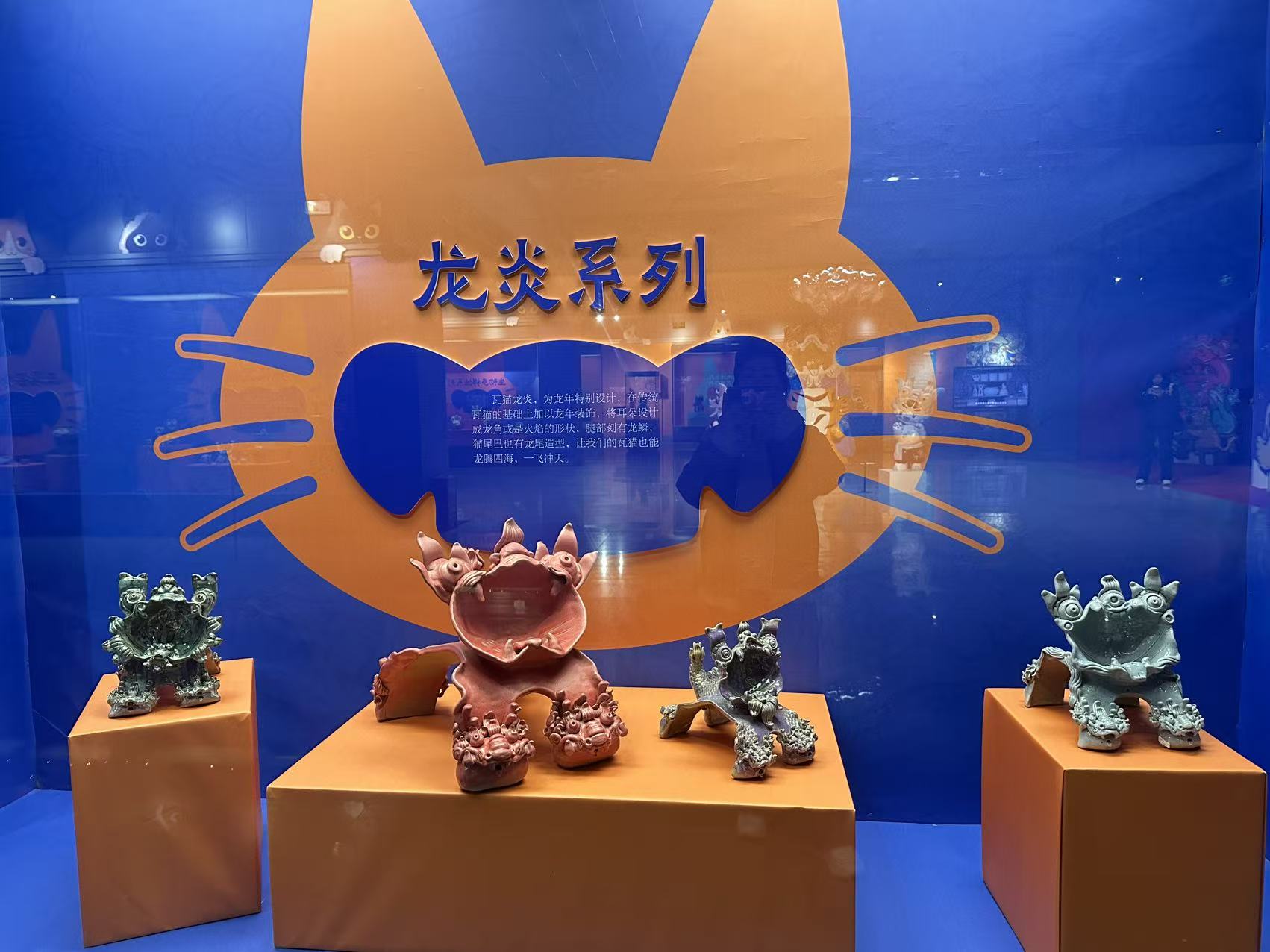
In Yuxi, the Wamao is not coupled with any such ritual. The consecration that gives the figure its significance in Heqing and Binchuan plays no part in how it is made or sold here, and so it has shed whatever ritual weight it once carried and become something else: a palm-sized desk ornament, a ceramic cup accessory, a blind-box collectible.
The bestselling model at one Yuxi workshop is a green figure with a coin lodged in its mouth. The open mouth, which in the older ritual context was meant to swallow and ward off evil spirits, has here been repurposed to attract wealth. If the coin sits inside, the back of the figure is sealed so that money cannot leak out; if the mouth is left empty, a hole is opened at the back to draw fortune in. In neither version does the design retain any reference to spirits or protection. Its logic is organized entirely around the promise of luck, and behind that, around what will sell to tourists.
Yunnan Province officially designated the Wamao as a provincial-level Intangible Cultural Heritage item in 2023 (Wang Xinyuan, 2024). But Yuxi had already been marketing it as “ICH” for nearly a decade before that designation arrived. In 2014, the city secured ICH status for a different ceramic tradition, Yuxi blue-and-white porcelain (Yunnan Gateway, 2020). For the next nine years, the Wamao rode on that credential, bundled into the same “ceramics heritage” brand even though it had no ICH designation of its own.